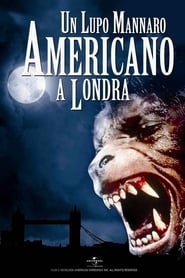
Bringing the Werewolf's four-legged form to life was another challenge. A full animatronic character was immediately discarded, and a suit version was supposedly attempted but deemed unfeasible. Baker eventually got the inspiration from his own childhood games. He explained: "Late one night, I was sitting in my living room and it came to me. I thought of a wheelbarrow race. So I stretched out my legs over the edge of a chair and my arms out in front, testing the balance, seeing if I could shift around while still holding my weight. Then I thought, 'what if we had a flat surface to support the weight - like a diving board with wheels, where we could move it around and vary the height?" The concept became the base of the Werewolf rig, which combined a suit for the upper half of the Werewolf and a dolly for the lower half, with a slant board supporting the weight of the performer and the lower legs puppeteered with wires or rods. Devised by Doug Beswick, the system had a jointed waist that could bend naturally from side to side, and a counterweight in the rear section to decrease the weight the performer had to support. The suit included arm extensions and a cable-controlled head. Given the technique, it had to be shot with the appropriate camera angles. The two suit performers were Kevin Brennan (whose proportions served as a reference for the construction of the suit) and Brendan Hughes. Brennan "was a trained dancer who had this really strong torso so he could hold himself in there at this awkward angle," first assistant director David Tringham said, "and just be with his legs sticking out the end with nothing to support him really."
Scritto da il
05-03-2025 alle ore 07:50
Immagini
Nessun dato in archivio
Consiglia
Voto
Nessun dato in archivio
Commenti
Nessun dato in archivio
Nessun dato in archivio